
- Stainless Steel Electrode Classification Chart
- Stainless Steel Classification Chart
- Stainless Steel Electrodes E70
- Stainless Steel Electrode Classification Definition
This page lists published welding codes, procedures, and specifications.
American Society of Mechanical Engineers (ASME) Codes[edit]
The American Society of Mechanical Engineers (ASME) Boiler and Pressure Vessel Code (BPVC) covers all aspects of design and manufacture of boilers and pressure vessels. All sections contain welding specifications, however most relevant information is contained in the following:
| Code | Description |
|---|---|
| ASME BPVC Section I | Rules for Construction of Power Boilers |
| ASME BPVC Section II | Part C: Specifications for Welding Rods, Electrodes, and Filler Metals.[a] |
| ASME BPVC Section III | Rules for Constructions of Nuclear Facility Components-Subsection NCA-General Requirements for Division 1 and Division 2 |
| ASME BPVC Section IV | Rules for Construction of Heating Boilers |
| ASME BPVC Section V | Nondestructive Examination |
| ASME BPVC Section VIII | Rules for Construction of Pressure Vessels Division 1 and Division 2 |
| ASME BPVC Section IX | Welding and Brazing Qualifications |
| ASME B16.25 | Buttwelding ends |
| ASME B31.1 | Power Piping |
| ASME B31.3 | Process Piping |
| ASME B31.9 | Building Services Piping |
American Welding Society (AWS) Standards[edit]
The American Welding Society (AWS) publishes over 240 AWS-developed codes, recommended practices and guides which are written in accordance with American National Standards Institute (ANSI) practices.[1] The following is a partial list of the more common publications:[citation needed]
Some stick electrodes also feature an ‘M’ that designates that the electrode is intended to meet most military requirements. A5.20 (CARBON STEEL ELECTRODES FOR FLUX-CORED ARC WELDING) Lastly, as an example of an AWS classification for a gas-shielded flux-cored wire, consider an E70T-1X product in Figure 3 below. This classification. Different types of stainless steel include the elements carbon (from 0.03% to greater than 1.00%), nitrogen, aluminium, silicon, sulfur, titanium, nickel, copper, selenium, niobium, and molybdenum. Specific types of stainless steel are often designated by a three-digit number, e.g., 304 stainless.
| Standard Number | Title |
|---|---|
| AWS A2.4 | Standard symbols for welding, brazing, and non-destructive examination |
| AWS A3.0 | Standard welding terms and definitions |
| AWS A5.1 | Specification for carbon steel electrodes for shielded metal arc welding |
| AWS A5.18 | Specification for carbon steel electrodes and rods for gas shielded arc welding |
| AWS B1.10 | Guide for the nondestructive examination of welds |
| AWS B2.1 | Specification for Welding Procedure and Performance Qualification |
| AWS D1.1 | Structural welding (steel) |
| AWS D1.2 | Structural welding (aluminum) |
| AWS D1.3 | Structural welding (sheet steel) |
| AWS D1.4 | Structural welding (reinforcing steel) |
| AWS D1.5 | Bridge welding |
| AWS D1.6 | Structural welding (stainless steel) |
| AWS D1.7 | Structural welding (strengthening and repair) |
| AWS D1.8 | Structural welding seismic supplement |
| AWS D1.9 | Structural welding (titanium) |
| AWS D3.6R | Underwater welding (Offshore & inland pipelines) |
| AWS D8.1 | Automotive spot welding |
| AWS D8.6 | Automotive spot welding electrodes supplement |
| AWS D8.7 | Automotive spot welding recommendations supplement |
| AWS D8.8 | Automotive arc welding (steel) |
| AWS D8.9 | Automotive spot weld testing |
| AWS D8.14 | Automotive arc welding (aluminum) |
| AWS D9.1 | Sheet metal welding |
| AWS D10.10 | Heating practices for pipe and tube |
| AWS D10.11 | Root pass welding for pipe |
| AWS D10.12 | Pipe welding (mild steel) |
| AWS D10.13 | Tube brazing (copper) |
| AWS D10.18 | Pipe welding (stainless steel) |
| AWS D11.2 | Welding (cast iron) |
| AWS D14.1 | Industrial mill crane welding |
| AWS D14.3 | Earthmoving & agricultural equipment welding |
| AWS D14.4 | Machinery joint welding |
| AWS D14.5 | Press welding |
| AWS D14.6 | Rotating Elements of Equipment |
| AWS D15.1 | Railroad welding |
| AWS D15.2 | Railroad welding practice supplement |
| AWS D16.1 | Robotic arc welding safety |
| AWS D16.2 | Robotic arc welding system installation |
| AWS D16.3 | Robotic arc welding risk assessment |
| AWS D16.4 | Robotic arc welder operator qualification |
| AWS D17.1 | Aerospace fusion welding |
| AWS D17.2 | Aerospace resistance welding |
| AWS D17.3 | Aerospace friction stir welding (aluminum) |
| AWS D18.1 | Hygienic tube welding (stainless steel) |
| AWS D18.2 | Stainless steel tube discoloration guide |
| AWS D18.3 | Hygienic equipment welding |
American Petroleum Institute (API) Standards[edit]
The American Petroleum Institute (API) oldest and most successful programs is in the development of API standards which started with its first standard in 1924. API maintains over 500 standards covering the oil and gas field.[2] The following is a partial list specific to welding:
A5.1 (CARBON STEEL ELECTRODES FOR SHIELDED METAL ARC WELDING) This AWS specification provides the standards for, among other filler metals, a common classification of stick electrode: E7018. Like other stick electrodes, E7018 products have four key designators in their classification (see Figure 1).
| Standard Number | Description |
|---|---|
| API RP 577 | Welding Inspection and Metallurgy |
| API RP 582 | Welding Guidelines for the Chemical, Oil, and Gas Industries |
| API 1104 | Welding of pipelines and related facilities |
| API 1169 | Basic Inspection Requirements for New Pipeline Construction |
Australian / New Zealand (AS/NZS) Standards[edit]
Standards Australia is the body responsible for the development, maintenance and publication of Australian Standards.[3] The following is a partial list specific to welding:
| Standard Number | Description |
|---|---|
| AS/NZS 1554.1 | Structural steel welding - Welding of steel structures |
| AS/NZS 1554.2 | Structural steel welding - Stud welding (steel studs to steel) |
| AS/NZS 1554.3 | Structural steel welding - Welding of reinforcing steel |
| AS/NZS 1554.4 | Structural steel welding - Welding of high strength quenched and tempered steels |
| AS/NZS 1554.5 | Structural steel welding - Welding of steel structures subject to high levels of fatigue loading |
| AS/NZS 1554.6 | Structural steel welding - Welding stainless steels for structural purposes |
| AS/NZS 1554.7 | Structural steel welding - Welding of sheet steel structures |
| AS/NZS 3992 | Pressure equipment - Welding and brazing qualification |
| AS/NZS 4855 | Welding consumables - Covered electrodes for manual metal arc welding |
| AS 4041 | Pressure Piping |
Canadian Standards Association (CSA) Standards[edit]
The Canadian Standards Association (CSA) is responsible for the development, maintenance and publication of CSA standards.[4] The following is a partial list specific to welding:
| Standard Number | Description |
|---|---|
| CAN/CSA-G401-14 | Corrugated steel pipe products |
| CAN/CSA-ISO 14341:11 (R2016) | Welding consumables - Wire electrodes and weld deposits for gas shielded metal arc welding of non alloy and fine grain steels - Classification |
| CAN/CSA-W117.2-12 | Safety in welding, cutting, and allied processes |
| G40.20-13/G40.21-13 | General requirements for rolled or welded structural quality steel/ Structural quality steel |
| W178.1-14 | Certification of welding inspection organizations |
| W178.2-14 | Certification of welding inspectors |
| W47.1-09 (R2014) | Certification of companies for fusion welding of steel |
| W47.2-11 (R2015) | Certification of companies for fusion welding of aluminum |
| W48-14 | Filler metals and allied materials for metal arc welding |
| W55.3-08 (R2013) | Certification of companies for resistance welding of steel and aluminum |
| W59-13 | Welded steel construction (metal arc welding) |
| W59.2-M1991 (R2013) | Welded Aluminum Construction |
| CAN/CSA-Z662-15 | Oil and gas pipeline systems |
British Standards (BS)[edit]
British Standards are developed, maintained and published by BSI Standards which is UK's National Standards Body.[5] The following is a partial list of standards specific to welding:
| Standard Number | Description |
|---|---|
| BS 499-1 | Welding terms and symbols. Glossary for welding, brazing and thermal cutting |
| BS 499-2C | Welding terms and symbols. European arc welding symbols in chart form |
| BS 2633 | Specification for Class I arc welding of ferritic steel pipework for carrying fluids |
| BS 2971 | Specification for class II arc welding of carbon steel pipework for carrying fluids |
| BS 4515-1 | Specification for welding of steel pipelines on land and offshore - Part 1: Carbon and carbon manganese steel pipelines |
| BS 4515-2 | Specification for welding of steel pipelines on land and offshore. Duplex stainless steel pipelines |
| PD 6705-2 | Structural use of steel and aluminium. Recommendations for the execution of steel bridges to BS EN 1090-2 |
| PD 6705-3 | Structural use of steel and aluminium. Recommendations for the execution of aluminium structures to BS EN 1090-3 |
International Organization for Standardization (ISO) Standards[edit]
International Organization for Standardization (ISO) has developed over 18500 standards and over 1100 new standards are published every year.[6] The following is a partial list of the standards specific to welding:
| Standard Number | Description |
|---|---|
| ISO 2553 | Welded, brazed and soldered joints - symbolic representation on drawings (1992) |
| ISO 2560 | Welding consumables. Covered electrodes for manual metal arc welding of non-alloy and fine grain steels. Classification |
| ISO 3580 | Covered electrodes for manual arc welding of creep-resisting steels - Code of symbols for identification |
| ISO 3581 | Covered electrodes for manual arc welding of stainless and other similar high alloy steels - Code of symbols for identification |
| ISO 3834 | Quality requirements for fusion welding of metallic materials, five parts. |
| ISO 4063 | Welding and allied processes - Nomenclature of processes and reference numbers |
| ISO 5817 | Welding. Fusion-welded joints in steel, nickel, titanium and their alloys (beam welding excluded). Quality levels for imperfections |
| ISO 6520-1 | Welding and allied processes — Classification of geometric imperfections in metallic materials — Part 1: Fusion welding |
| ISO 6520-2 | Welding and allied processes — Classification of geometric imperfections in metallic materials — Part 2: Welding with pressure |
| ISO 6947 | Welds. Working positions. Definitions of angles of slope and rotation |
| ISO 9606 | Qualification test of welders — Fusion welding, parts 1 to 5 |
| ISO 9692-1 | Welding and allied processes. Recommendations for joint preparation. Manual metal-arc welding, gas-shielded metal-arc welding, gas welding, TIG welding and beam welding of steels |
| ISO 9692-2 | Welding and allied processes. Joint preparation. Submerged arc welding of steels |
| ISO 9692-3 | Welding and allied processes. Joint preparation. Part 3: TIG and MIG welding of aluminium and its alloys |
| ISO 13847 | Petroleum and natural gas industries - Pipeline transportation systems - Welding of pipelines |
| ISO 13916 | Welding - Guidance on the measurement of preheating temperature, interpass temperature and preheat mainteanance temperature |
| ISO 13918 | Welding - Studs and ceramic ferrules for arc stud welding |
| ISO 13919-1 | Welding - Electron and laser-beam welded joints - Guidance on quality level for imperfections - Part 1: Steel |
| ISO 13919-2 | Welding - Electron and laser-beam welded joints - Guidance on quality level for imperfections - Part 2: Aluminium and its weldable alloys |
| ISO 13920 | Welding - General tolerances for welded constructions - Dimensions for lengths and angles - Shape and position |
| ISO 14112 | Gas welding equipment - Small kits for gas brazing and welding |
| ISO 14175 | Welding consumables — Gases and gas mixtures for fusion welding and allied processes. Replaced EN 439:1994 in Europe. |
| ISO 14341 | Welding consumables. Wire electrodes and deposits for gas shielded metal arc welding of non alloy and fine grain steels. Classification |
| ISO 14554 | Resistance welding |
| ISO 14744 | Electron beam welding, six parts |
| ISO 15607 | Specification and qualification of welding procedures for metallic materials - General rules |
| ISO/TR 15608 | Welding - Guidelines for a metallic material grouping system |
| ISO 15609 | Specification and qualification of welding procedures for metallic materials - Welding procedure specification, five parts. |
| ISO 15610 | Specification and qualification of welding procedures for metallic materials — Qualification based on tested welding consumables |
| ISO 15611 | Specification and qualification of welding procedures for metallic materials — Qualification based on previous welding experience |
| ISO 15612 | Specification and qualification of welding procedures for metallic materials — Qualification by adoption of a standard welding procedure |
| ISO 15613 | Specification and qualification of welding procedures for metallic materials — Qualification based on pre-production welding test |
| ISO 15614 | Specification and qualification of welding procedures for metallic materials - Welding procedure test, 13 parts. |
| ISO 15615 | Gas welding equipment. Acetylene manifold systems for welding, cutting and allied processes. Safety requirements in high-pressure devices |
| ISO 15618-1 | Qualification testing of welders for under-water welding. Diver-welders for hyperbaric wet welding |
| ISO 15618-2 | Qualification testing of welders for under-water welding. Diver-welders and welding operators for hyperbaric dry welding |
| ISO 17635 | Non-destructive testing of welds. General rules for metallic materials |
| ISO 17660-1 | Welding - Welding of reinforcing steel - Part 1: Load-bearing welded joints |
| ISO 17660-2 | Welding - Welding of reinforcing steel - Part 1: Non-load bearing welded joints |
| ISO/TR 20172 | Welding — Grouping systems for materials — European materials |
| ISO/TR 20173 | Welding — Grouping systems for materials — American materials |
| ISO/TR 20174 | Welding — Grouping systems for materials — Japanese materials |
| ISO 24394 | Welding for aerospace applications. Qualification test for welders and welding operators. Fusion welding of metallic components |
European Union (CEN) standards[edit]
The European Committee for Standardization (CEN) had issued numerous standards covering welding processes, which unified and replaced former national standards. Of the former national standards, those issued by BSI and DIN were widely used outside their countries of origin. After the Vienna Agreement with ISO, CEN has replaced most of them with equivalent ISO standards (EN ISO series).[7]
| Standard Number | Description |
|---|---|
| EN 287-1 | Qualification test of welders — Fusion welding — Part 1: Steels. Withdrawn and replaced by EN ISO 9606-1 [b][9] |
| EN 1090-1 | Execution of steel structures and aluminium structures - Part 1: Requirements for conformity assessment of structural components |
| EN 1090-2 | Execution of steel structures and aluminium structures - Part 2: Technical requirements for steel structures |
| EN 1090-3 | Execution of steel structures and aluminium structures - Part 3: Technical requirements for aluminium structures |
| EN 1011-1 | Welding — Recommendations for welding of metallic materials — Part 1: General guidance for arc welding |
| EN 1011-2 | Welding — Recommendations for welding of metallic materials — Part 2: Arc welding of ferritic steels |
| EN 1011-3 | Welding — Recommendations for welding of metallic materials — Part 3: Arc welding of stainless steels |
| EN 1011-4 | Welding — Recommendations for welding of metallic materials — Part 4: Arc welding of aluminium and aluminium alloys |
| EN 1011-5 | Welding. Recommendations for welding of metallic materials. Welding of clad steel |
| EN 1011-6 | Welding. Recommendations for welding of metallic materials. Laser beam welding |
| EN 1011-7 | Welding — Recommendations for welding of metallic materials — Part 7: Electron beam welding |
| EN 1011-8 | Welding. Recommendations for welding of metallic materials. Welding of cast irons |
| EN 1418 | Welding personnel. Approval testing of welding operators for fusion welding and resistance weld setters for fully mechanized and automatic welding of metallic materials. (CEN version of ISO 14732) |
| EN 1708-1 | Welding. Basic welded joint details in steel. Pressurized components. |
| EN 1708-2 | Welding. Basic weld joint details in steel. Non-internal pressurized components. |
| EN 1708-3 | Welding. Basic weld joint details in steel. Clad, buttered and lined pressurized components. |
| EN 1993-1-8 | Eurocode 3: Design of steel structures – Part 1-8: General – Design of joints |
| EN 13133 | Brazing - Brazer approval |
| EN 22553 | Welded, brazed and soldered joints – Symbolic representation on drawings. (CEN version of ISO 2553) |
Additional requirements for welding exist in CEN codes and standards for specific products, like EN 12952, EN 12953, EN 13445, EN 13480, etc.

German Standards (DIN and others)[edit]
NA 092 is the Standards Committee for welding and allied processes (NAS) at DIN Deutsches Institut für Normung e. V.[10] The following is a partial list of DIN welding standards:
| Code | Description |
|---|---|
| DIN 1910-100 | Welding; terms dependent on materials for metal welding |
| SEW 088 | Schweißgeeignete Feinkornbaustähle - Richtlinien für die Verarbeitung besonders für das Schmelzschweißen, Stahlinstitut VDEh |
| Merkblatt DVS 0916 | Metall-Schutzgasschweißen von Feinkornbaustählen, Deutscher Verband für Schweißtechnik e.V. |
See also[edit]
Notes[edit]
- ^Actually the ASME code adopts the AWS 5.* series of specifications and renames them as SFA 5.*
- ^The 2004 version of this CEN standard was introduced in place of ISO 9606-1, which was not accepted by the ISO committee due to reactions by USA and Canada.[8]
References[edit]
- ^'American Welding Society - Technical'. American Welding Society. Retrieved 7 November 2011.
- ^'American Petroleum Institute Standards'. American Petroleum Institute. Retrieved 7 November 2011.
- ^'Standards Development'. Standards Australia. Retrieved 7 November 2011.
- ^'About CSA'. Canadian Standards Association. Archived from the original on 29 October 2011. Retrieved 7 November 2011.
- ^'BSI Standards'. BSI Standards. Retrieved 7 November 2011.
- ^'ISO Standards'. International Organization for Standardization. Retrieved 7 November 2011.
- ^'About us'. European Committee for Standardization (CEN). Retrieved 7 November 2011.
- ^Davis, A.: 'Welder Qualification Standards - Philosophy and Feedback', AWS Welding Journal, July 2003, pp. 14–16. EN ISO 9606-1 was finally published in November 2013 and is gradually introduced in Europe, the deadline for complete replacement being October 2015.
- ^'EWF Guide to deal with the transition from EN 287-1 to EN ISO 9606-1 as efficiently as possible (EWF-654-13)'(PDF) (PDF). European Federation for Welding, Joining and Cutting (EWF). 2013. Archived from the original(PDF) on 2013-12-12.
- ^'NA 092 Welding and allied processes Standards Committee'. DIN. Retrieved 7 November 2011.
Further reading and external links[edit]
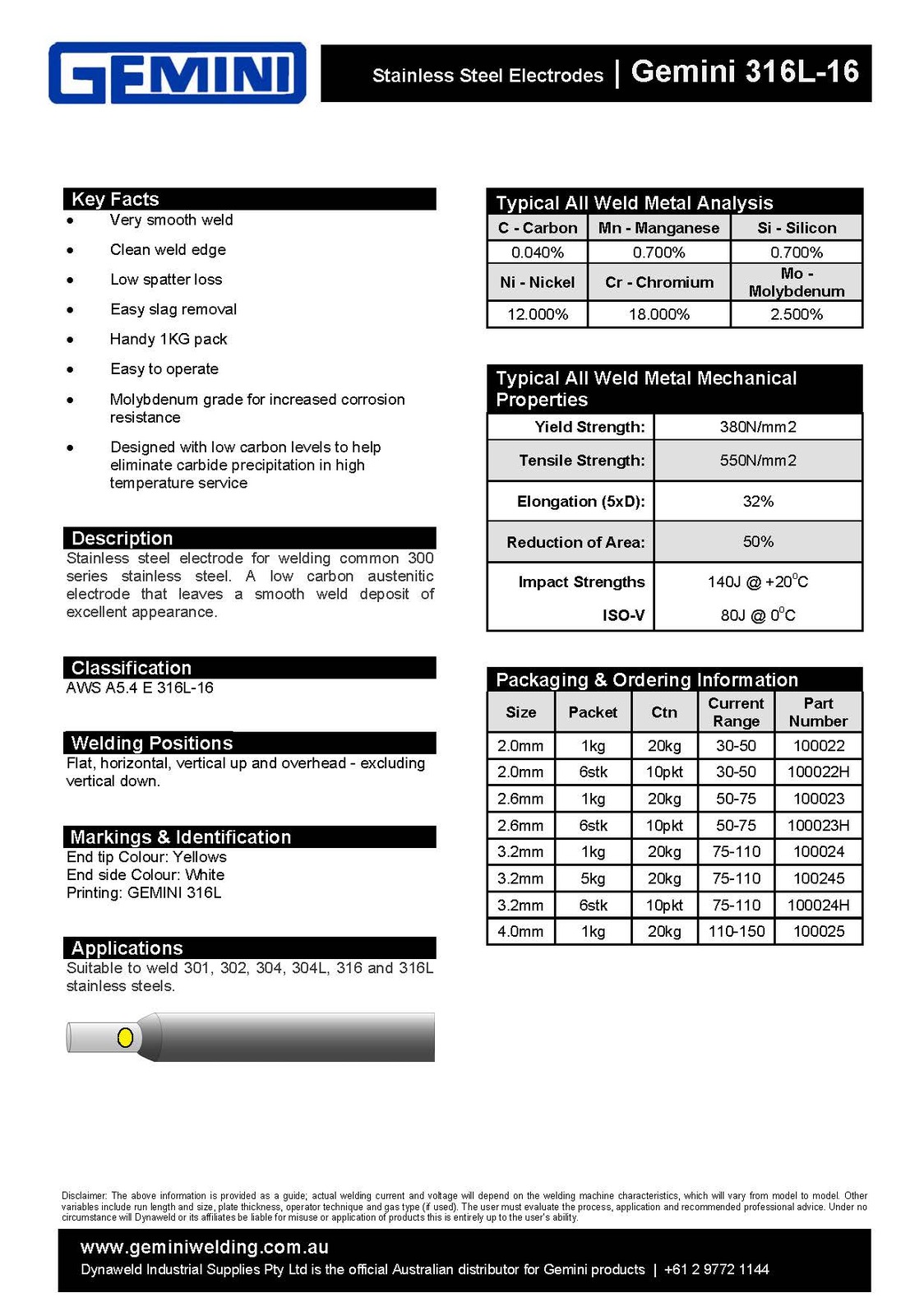
An electrode is a metal wire that is coated.
It is made out of materials with a similar composition to the metal being welded.
There are a variety of factors that go into choosing the right electrode for each project.
SMAW or stick electrodes are consumable, meaning they become part of the weld, while TIG electrodes are non-consumable as they do not melt and become part of the weld, requiring the use of a welding rod.
The MIG welding electrode is a continuously fed wire referred to as MIG wire.
Electrode selection is critical to ease of cleanup, weld strength, bead quality and for minimizing any spatter.
Electrodes need to be stored in a moisture-free environment and carefully removed from any package (follow the directions to avoid damage).
Covered Welding Electrodes
When molten metal is exposed to air, it absorbs oxygen and nitrogen, and becomes brittle or is otherwise adversely affected.
A slag cover is needed to protect molten or solidifying weld metal from the atmosphere. This cover can be obtained from the electrode coating.
The composition of the welding electrode coating determines its usability, as well as the composition of the deposited weld metal and the electrode specification.
The formulation of welding electrode coatings is based on well-established principles of metallurgy, chemistry, and physics.
The coating protects the metal from damage, stabilizes the arc, and improves the weld in other ways, which include:
- Smooth weld metal surface with even edges
- Minimum spatter adjacent to the weld
- A stable welding arc
- Penetration control
- A strong, tough coating
- Easier slag removal
- Improved deposition rate
The metal-arc electrodes may be grouped and classified as bare or thinly coated electrodes, and shielded arc or heavy coated electrodes.
The covered electrode is the most popular type of filler metal used in arc welding.
The composition of the electrode covering determines the usability of the electrode, the composition of the deposited weld metal, and the specification of the electrode.
The type of electrode used depends on the specific properties required in the weld deposited.
These include corrosion resistance, ductility, high tensile strength, the type of base metal to be welded, the position of the weld (flat, horizontal, vertical, or overhead); and the type of current and polarity required.
Classification
The American Welding Society’s classification number series for welding electrodes has been adopted by the welding industry.
The electrode identification system for steel arc welding is set up as follows:
- E – indicates electrode for arc welding.
- The first two (or three) digits – indicate tensile strength (the resistance of the material to forces trying to pull it apart) in thousands of pounds per square inch of the deposited metal.
- The third (or fourth) digit – indicates the position of the weld. 0 indicates the classification is not used; 1 is for all positions; 2 is for flat and horizontal positions only; 3 is for flat position only.
- The fourth (or fifth) digit – indicates the type of electrode coating and the type of power supply used; alternating or direct current, straight or reverse polarity.
- The types of coating, welding current, and polarity position designated by the fourth (or fifth) identifying digit of the electrode classification are listed in the table 5-4 below.
- The number E6010 – indicates an arc welding electrode with minimum stress relieved tensile strength of 60,000 psi; is used in all positions, and reverse polarity direct current is required.
Coating, Current and Polarity Types Designated By the Fourth Digit in the Electrode Classification Number
| Digit | Coating | Weld Current |
|---|---|---|
| 0 | * | * |
| 1 | Cellulose Potassium | ac, dcrp, dcsp |
| 2 | Titania sodium | ac, dcsp |
| 3 | Titania potassium | ac, dcsp, dcrp |
| 4 | Iron Powder Titania | ac, dcsp, dcrp |
| 5 | Low hydrogen sodium | dcrp |
| 6 | Low hydrogen potassium | ac, dcrp |
| 7 | Iron powder iron oxide | ac, dcsp |
| 8 | Iron powder low hydrogen | ac, dcrp, dcsp |
When the fourth (or last) digit is 0, the type of coating and current to be used are determined by the third digit.
Table 5-4
The welding electrode identification system for stainless steel arc welding is set up as follows:
- E indicates electrode for arc welding.
- The first three digits indicated the American Iron and Steel type of stainless steel.
- The last two digits indicate the current and position used.
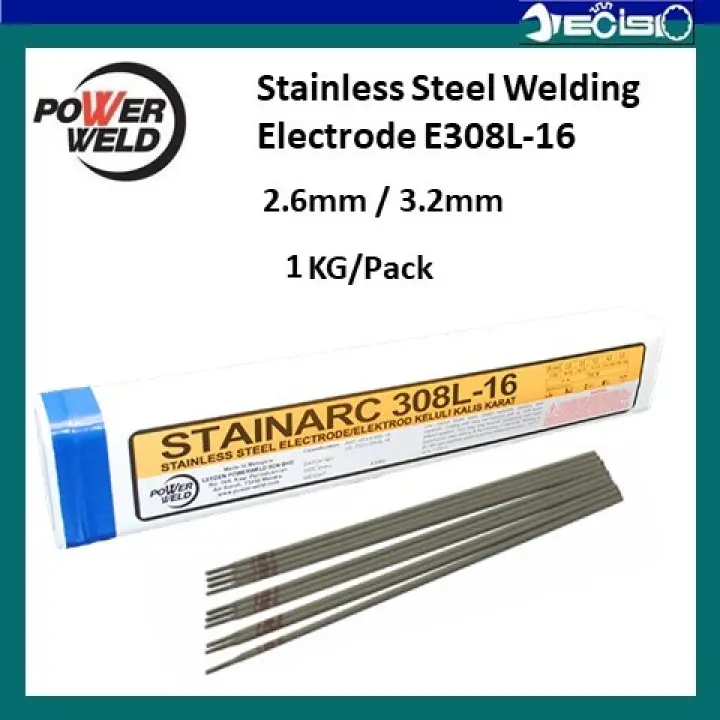
- The number E-308-16 by this system indicates stainless steel Institute type 308; used in all positions; with alternating or reverse polarity direct current.
Classification System for Submerged Arc Electrodes
The system for identifying solid bare carbon steel for submerged arc is as follows:
- The prefix letter E is used to indicate an electrode. This is followed by a letter which indicates the level of manganese, i.e., L for low, M for medium, and H for high manganese. This is followed by a number which is the average amount of carbon in points or hundredths of a percent. The composition of some of these wires is almost identical with some of the wires in the gas metal arc welding specification.
- The electrode wires used for submerged arc welding are given in American Welding Society specification, “Bare Mild Steel Electrodes and Fluxes for Submerged Arc Welding.” This specification provides both the wire composition and the weld deposit chemistry based on the flux used. The specification does give composition of the electrode wires. This information is given in table 8-1. When these electrodes are used with specific submerged arc fluxes and welded with proper procedures, the deposited weld metal will meet mechanical properties required by the specification.
- In the case of the filler reds used for oxyfuel gas welding, the prefix letter is R, followed by a G indicating that the rod is used expressly for gas welding. These letters are followed by two digits which will be 45, 60, or 65. These designate the approximate tensile strength in 1000 psi (6895 kPa).
- In the case of nonferrous filler metals, the prefix E, R, or RB is used, followed by the chemical symbol of the principal metals in the wire. The initials for one or two elements will follow. If there is more than one alloy containing the same elements, a suffix letter or number may be added.
- The American Welding Society’s specifications are most widely used for specifying bare welding rod and electrode wires. There are also military specifications such as the MIL-E or -R types and federal specifications, normally the QQ-R type and AMS specifications. The particular specification involved should be used for specifying filler metals.
The most important aspect of solid welding electrode wires and rods in their composition, which is given by the specification. The specifications provide the limits of composition for the different wires and mechanical property requirements.
Occasionally, on copper-plated solid wires, the copper may flake off in the feed roll mechanism and create problems. It may plug liners, or contact tips. A light copper coating is desirable. The electrode wire surface should be reasonably free of dirt and drawing compounds. This can be checked by using a white cleaning tissue and pulling a length of wire through it. Too much dirt will clog the liners, reduce current pickup in the tip, and may create erratic welding operation.
Temper or strength of the wire can be checked in a testing machine. Wire of a higher strength will feed through guns and cables better. The minimum tensile strength recommended by the specification is 140,000 psi (965,300 kPa).
The continuous electrode wire is available in many different packages. They range from extremely small spools that are used on spool guns, through medium-size spools for fine-wire gas metal arc welding. Coils of electrode wire are available which can be placed on reels that are a part of the welding equipment. There are also extremely large reels weighing many hundreds of pounds. The electrode wire is also available in drums or payoff packs where the wire is laid in the round container and pulled from the container by an automatic wire feeder.
Coatings
The coatings of welding electrodes for welding mild and low alloy steels may have from 6 to 12 ingredients, which includes:
- Cellulose – to provide a gaseous shield with a reducing agent in which the gas shield surrounding the arc is produced by the disintegration of cellulose
- Metal carbonates – to adjust the basicity of the slag and to provide a reducing atmosphere
- Titanium dioxide – to help form a highly fluid, but quick-freezing slag and to provide ionization for the arc
- Ferromanganese & ferrosilicon – to help deoxidize the molten weld metal and to supplement the manganese content and silicon content of the deposited weld metal
- Clays & gums – to provide elasticity for extruding the plastic coating material and to help provide strength to the coating
- Calcium fluoride – to provide shielding gas to protect the arc, adjust the basicity of the slag, and provide fluidity and solubility of the metal oxides
- Mineral silicates – to provide slag and give strength to the electrode covering
- Alloying metals including nickel, molybdenum, and chromium – to provide alloy content to the deposited weld metal
- Iron or manganese oxide – to adjust the fluidity and properties of the slag and to help stabilize the arc
- Iron powder – to increase the productivity by providing extra metal to be deposited in the weld.
The principal types of welding electrode coatings for mild steel and are described below.
- Cellulose-sodium (EXX10): Electrodes of this type cellulosic material in the form of wood flour or reprocessed low alloy electrodes have up to 30 percent paper. The gas shield contains carbon dioxide and hydrogen, which are reducing agents. These gases tend to produce a digging arc that provides deep penetration. The weld deposit is somewhat rough, and the spatter is at a higher level than other electrodes. It does provide extremely good mechanical properties, particularly after aging. This is one of the earliest types of electrodes developed, and is widely used for cross country pipe lines using the downhill welding technique. It is normally used with direct current with the electrode positive (reverse polarity).
- Cellulose-potassium (EXX11): This electrode is very similar to the cellulose-sodium electrode, except more potassium is used than sodium. This provides ionization of the arc and makes the electrode suitable for welding with alternating current. The arc action, the penetration, and the weld results are very similar. In both E6010 and E6011 electrodes, small amounts of iron powder may be added. This assists in arc stabilization and will slightly increase the deposition rate.
- Rutile-sodium (EXX12): When rutile or titanium dioxide content is relatively high with respect to the other components, the electrode will be especially appealing to the welder. Electrodes with this coating have a quiet arc, an easily controlled slag, and a low level of spatter. The weld deposit will have a smooth surface and the penetration will be less than with the cellulose electrode. The weld metal properties will be slightly lower than the cellulosic types. This type of electrode provides a fairly high rate of deposition. It has a relatively low arc voltage, and can be used with alternating current or with direct current with electrode negative (straight polarity).
- Rutile-potassium (EXX13): This electrode coating is very similar to the rutile-sodium type, except that potassium is used to provide for arc ionization. This makes it more suitable for welding with alternating current. It can also be used with direct current with either polarity. It produces a very quiet, smooth running arc.
- Rutile-iron powder (EXXX4): This coating is very similar to the rutile coatings mentioned above, except that iron powder is added. If iron content is 25 to 40 percent, the electrode is EXX14. If iron content is 50 percent or more, the electrode is EXX24. With the lower percentage of iron powder, the electrode can be used in all positions. With the higher percentage of iron paler, it can only be used in the flat position or for making horizontal fillet welds. In both cases, the deposition rate is increased, based on the amount of iron powder in the coating.
- Low hydrogen-sodium (EXXX5): Coatings that contain a high proportion of calcium carbonate or calcium fluoride are called low hydrogen, lime ferritic, or basic type electrodes. In this class of coating, cellulose, clays, asbestos, and other minerals that contain combined water are not used. This is to ensure the lowest possible hydrogen content in the arc atmosphere. These electrode coatings are baked at a higher temperature. The low hydrogen electrode family has superior weld metal properties. They provide the highest ductility of any of the deposits. These electrodes have a medium arc with medium or moderate penetration. They have a medium speed of deposition, but require special welding techniques for best results. Low hydrogen electrodes must be stored under controlled conditions. This type is normally used with direct current with electrode positive (reverse polarity).
- Low hydrogen-potassium (EXXX6): This type of coating is similar to the low hydrogen-sodium, except for the substitution of potassium for sodium to provide arc ionization. This electrode is used with alternating current and can be used with direct current, electrode positive (reverse polarity). The arc action is smother, but the penetration of the two electrodes is similar.
- Low hydrogen-potassium (EXXX6): The coatings in this class of electrodes are similar to the low-hydrogen type mentioned above. However, iron powder is added to the electrode, and if the content is higher than 35 to 40 percent, the electrode is classified as an EXX18.
- Low hydrogen-iron powder (EXX28): This electrode is similar to the EXX18, but has 50 percent or more iron powder in the coating. It is usable only when welding in the flat position or for making horizontal fillet welds. The deposition rate is higher than EXX18. Low hydrogen coatings are used for all of the higher-alloy electrodes. By additions of specific metals in the coatings, these electrodes become the alloy types where suffix letters are used to indicate weld metal compositions. Electrodes for welding stainless steel are also the low-hydrogen type.
- Iron oxide-sodium (EXX20): Coatings with high iron oxide content produce a weld deposit with a large amount of slag. This can be difficult to control. This coating type produces high-speed deposition, and provides medium penetration with low spatter level. The resulting weld has a very smooth finish. The electrode is usable only with flat position welding and for making horizontal fillet welds. The electrode can be used with alternating current or direct current with either polarity.
- Iron-oxide-iron power (EXX27): This type of electrode is very similar to the iron oxide-sodium type, except it contains 50 percent or more iron power. The increased amount of iron power greatly increases the deposition rate. It may be used with alternating direct current of either polarity.
There are many types of coatings other than those mentioned here, most of which are usually combinations of these types but for special applications such as hard surfacing, cast iron welding, and for nonferrous metals.
Storage
Electrodes must be kept dry. Moisture destroys the desirable characteristics of the coating and may cause excessive spattering and lead to porosity and cracks in the formation of the welded area. Electrodes exposed to damp air for more than two or three hours should be dried by heating in a suitable oven (fig 5-32) for two hours at 500°F (260°C).
After they have dried, they should be stored in a moisture-proof container. Bending the electrode can cause the coating to break loose from the core wire. Electrodes should not be used if the core wire is exposed.

Electrodes that have an “R” suffix in the AWS classification have a higher resistance to moisture.
The Types of Electrodes
Bare Electrodes
Bare welding electrodes are made of wire compositions required for specific applications.
These electrodes have no coatings other than those required in wire drawing. These wire drawing coatings have some slight stabilizing effect on the arc but are otherwise of no consequence. Bare electrodes are used for welding manganese steel and other purposes where a coated electrode is not required or is undesirable. A diagram of the transfer of metal across the arc of a bare electrode is shown in figure 5-29.
Light Coated Electrodes
Stainless Steel Electrode Classification Chart
Light coated welding electrodes have a definite composition.
A light coating has been applied on the surface by washing, dipping, brushing, spraying, tumbling, or wiping. The coatings improve the characteristics of the arc stream. They are listed under the E45 series in the electrode identification system.
The coating generally serves the functions described below:
- It dissolves or reduces impurities such as oxides, sulfur, and phosphorus.
- It changes the surface tension of the molten metal so that the globules of metal leaving the end of the electrode are smaller and more frequent. This helps make flow of molten metal more uniform.
- It increases the arc stability by introducing materials readily ionized (i.e., changed into small particles with an electric charge) into the arc stream.
- Some of the light coatings may produce a slag. The slag is quite thin and does not act in the same manner as the shielded arc electrode type slag.
Shielded Arc or Heavy Coated Electrodes
Shielded arc or heavy coated welding electrodes have a definite composition on which a coating has been applied by dipping or extrusion.
The electrodes are manufactured in three general types:
- those with cellulose coatings
- those with mineral coatings
- those whose coatings are combinations of mineral and cellulose
The cellulose coatings are composed of soluble cotton or other forms of cellulose with small amounts of potassium, sodium, or titanium, and in some cases added minerals.
The mineral coatings consist of sodium silicate, metallic oxides clay, and other inorganic substances or combinations thereof.
Stainless Steel Classification Chart
Cellulose coated electrodes protect the molten metal with a gaseous zone around the arc as well as the weld zone.
The mineral coated electrode forms a slag deposit.
The shielded arc or heavy coated electrodes are used for welding steels, cast iron, and hard surfacing. See figure 5-31 below.
Functions of Shielded Arc or Heavy Coated Electrodes
These welding electrodes produce a reducing gas shield around the arc.
This prevents atmospheric oxygen or nitrogen from contaminating the weld metal.
The oxygen readily combines with the molten metal, removing alloying elements and causing porosity.
Nitrogen causes brittleness, low ductility, and in Some cases low strength and poor resistance to corrosion.
They reduce impurities such as oxides, sulfur, and phosphorus so that these impurities will not impair the weld deposit.
They provide substances to the arc which increases its stability. This eliminates wide fluctuations in the voltage so that the arc can be maintained without excessive spattering.
By reducing the attractive force between the molten metal and the end of the electrodes, or by reducing the surface tension of the molten metal, the vaporized and melted coating causes the molten metal at the end of the electrode to break up into fine, small particles.
The coatings contain silicates which will form a slag over the molten weld and base metal. Since the slag solidifies at a relatively slow rate, it holds the heat and allows the underlying metal to cool and solidify slowly. This slow solidification of the metal eliminates the entrapment of gases within the weld and permits solid impurities to float to the surface. Slow cooling also has an annealing effect on the weld deposit.
The physical characteristics of the weld deposit are modified by incorporating alloying materials in the electrode coating. The fluxing action of the slag will also produce weld metal of better quality and permit welding at higher speeds.
Tungsten Electrodes
Nonconsumable welding electrodes for gas tungsten-arc (TIG) welding are of three types: pure tungsten, tungsten containing 1 or 2 percent thorium, and tungsten containing 0.3 to 0.5 percent zirconium.
Tungsten electrodes can be identified as to type by painted end marks as follows.
- Green — pure tungsten.
- Yellow — 1 percent thorium.
- Red — 2 percent thorium.
- Brown — 0.3 to 0.5 percent zirconium.
Pure tungsten (99. 5 percent tungsten) electrodes are generally used on less critical welding operations than the tungstens which are alloyed. This type of electrode has a relatively low current-carrying capacity and a low resistance to contamination.
Stainless Steel Electrodes E70
Thoriated tungsten electrodes (1 or 2 percent thorium) are superior to pure tungsten electrodes because of their higher electron output, better arc-starting and arc stability, high current-carrying capacity, longer life, and greater resistance to contamination.
Tungsten welding electrodes containing 0.3 to 0.5 percent zirconium generally fall between pure tungsten electrodes and thoriated tungsten electrodes in terms of performance. There is, however, some indication of better performance in certain types of welding using ac power.
Finer arc control can be obtained if the tungsten alloyed electrode is ground to a point (see figure 5-33). When electrodes are not grounded, they must be operated at maximum current density to obtain reasonable arc stability. Tungsten electrode points are difficult to maintain if standard direct current equipment is used as a power source and touch-starting of the arc is standard practice. Maintenance of electrode shape and the reduction of tungsten inclusions in the weld can best be accomplished by superimposing a high-frequency current on the regular welding current. Tungsten electrodes alloyed with thorium and zirconium retain their shape longer when touch-starting is used.
The welding electrode extension beyond the gas cup is determined by the type of joint being welded. For example, an extension beyond the gas cup of 1/8 in. (3.2 mm) might be used for butt joints in light gage material, while an extension of approximately 1/4 to 1/2 in. (6.4 to 12.7 mm) might be necessary on some fillet welds. The tungsten electrode of torch should be inclined slightly and the filler metal added carefully to avoid contact with the tungsten. This will prevent contamination of the electrode. If contamination does occur, the electrode must be removed, reground, and replaced in the torch.
Direct Current Arc Welding Electrodes
The manufacturer’s recommendations should be followed when a specific type of welding electrode is being used. In general, direct current shielded arc electrodes are designed either for reverse polarity (electrode positive) or for straight polarity (electrode negative), or both. Many, but not all, of the direct current electrodes can be used with alternating current. Direct current is preferred for many types of covered, nonferrous, bare and alloy steel electrodes. Recommendations from the manufacturer also include the type of base metal for which given electrodes are suited, corrections for poor fit-ups, and other specific conditions.
In most cases, straight polarity electrodes will provide less penetration than reverse polarity electrodes, and for this reason will permit greater welding speed. Good penetration can be obtained from either type with proper welding conditions and arc manipulation.
Alternating Current Arc Welding Electrodes
Coated electrodes which can be used with either direct or alternating current are available. Alternating current is more desirable while welding in restricted areas or when using the high currents required for thick sections because it reduces arc blow. Arc blow causes blowholes, slag inclusions, and lack of fusion in the weld.
Alternating current is used in atomic hydrogen welding and in those carbon arc processes that require the use of two carbon electrodes. It permits a uniform rate of welding and electrode consumption. In carbon-arc processes where one carbon electrode is used, direct current straight polarity is recommended, because the electrode will be consumed at a lower rate.
Electrode Defects & Their Effects
If certain elements or oxides are present in electrode coatings, the arc stability will be affected. In bare electrodes, the composition and uniformity of the wire is an important factor in the control of arc stability. Thin or heavy coatings on the electrodes will riot completely remove the effects of defective wire.
Aluminum or aluminum oxide (even when present in 0.01 percent), silicon, silicon dioxide, and iron sulphate unstable. Iron oxide, manganese oxide, calcium oxide, and stabilize the arc.
When phosphorus or sulfur are present in the electrode in excess of 0.04 percent, they will impair the weld metal because they are transferred from the electrode to the molten metal with very little loss. Phosphorus causes grain growth, brittleness, and “cold shortness” (i. e., brittle when below red heat) in the weld. These defects increase in magnitude as the carbon content of the steel increases. Sulfur acts as a slag, breaks up the soundness of the weld metal, and causes “hot shortness” (i. e., brittle when above red heat). Sulfur is particularly harmful to bare, low-carbon steel electrodes with a low manganese content. Manganese promotes the formation of sound welds.
If the heat treatment, given the wire core of an electrode, is not uniform, the electrode will produce welds inferior to those produced with an electrode of the same composition that has been properly heat treated.
Deposition Rates
The different types of electrodes have different deposition rates due to the composition of the coating. The electrodes containing iron power in the coating have the highest deposition rates. In the United States, the percentage of iron power in a coating is in the 10 to 50 percent range. This is based on the amount of iron power in the coating versus the coating weight. This is shown in the formula:
These percentages are related to the requirements of the American Welding Society (AWS) specifications. The European method of specifying iron power is based on the weight of deposited weld metal versus the weight of the bare core wire consumed. This is shown as follows:
Stainless Steel Electrode Classification Definition
Thus, if the weight of the deposit were double the weight of the core wire, it would indicate a 200 percent deposition efficiency, even though the amount of the iron power in the coating represented only half of the total deposit. The 30 percent iron power formula used in the United States would produce a 100 to 110 percent deposition efficiency using the European formula. The 50 percent iron power electrode figured on United States standards would produce an efficiency of approximately 150 percent using the European formula.
Non-consumable Electrodes
Types
There are two types of nonconsumable welding electrodes.
- The carbon electrode is a non-filler metal electrode used in arc welding or cutting, consisting of a carbon graphite rod which may or may not be coated with copper or other coatings.
- The tungsten electrode is defined as a non-filler metal electrode used in arc welding or cutting, made principally of tungsten.
Carbon Electrodes
The American Welding Society does not provide specification for carbon welding electrodes but there is a military specification, no. MIL-E-17777C, entitled, “Electrodes Cutting and Welding Carbon-Graphite Uncoated and Copper Coated”.
This specification provides a classification system based on three grades: plain, uncoated, and copper coated. It provides diameter information, length information, and requirements for size tolerances, quality assurance, sampling, and various tests. Applications include carbon arc welding, twin carbon arc welding, carbon cutting, and air carbon arc cutting and gouging.
Stick Electrodes
Stick welding electrodes vary by:
- Size: common sizes are 1⁄16, 5⁄64, 3⁄32 (most common), 1⁄8, 3⁄16, 7⁄32, 1⁄4, and 5⁄16 inch. Core wire used with electrodes needs to be narrower than the materials that are welded.
- Material: stick welding electrodes come in cast iron, high carbon steel, mild steel, iron-free (nonferrous) and special alloys.)
- Strength: referred to as tensile strength. Each weld needs to be stronger than the metal being welded. This means that the materials in the electrode need to be stronger as well.
- Welding position (horizontal, flat etc): different electrodes are used for each welding position.
- Iron powder mix (up to 60% in flux): iron powder in the flux increases the amount of molten metal available for the weld (heat turns powder into steel).
- Soft arc designation: for thinner metals or for metals that don’t have a perfect fit or gap.
As described above there are many kinds of electrodes. Here are the most popular stick welding (SMAW) electrodes:
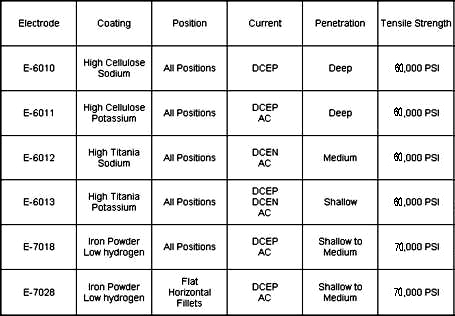
- E6013 and E6012: For thin metals and joints that do not easily fit together.
- E6011: Good for working on surfaces that are oily, rusted or has dirt. Versatile in that it works with DC or AC polarity. Creates little slag, another big plus. Note that this electrode should not be placed into an electrode oven.
- E6010: Similar to the E6011 but only works with direct current (DC). Note that this electrode should not be placed into an electrode oven.
- E76018 and E7016: Manufactured with iron powder in the flux. Creates strong welds, but has a puddle that might present some control issues for beginners.